
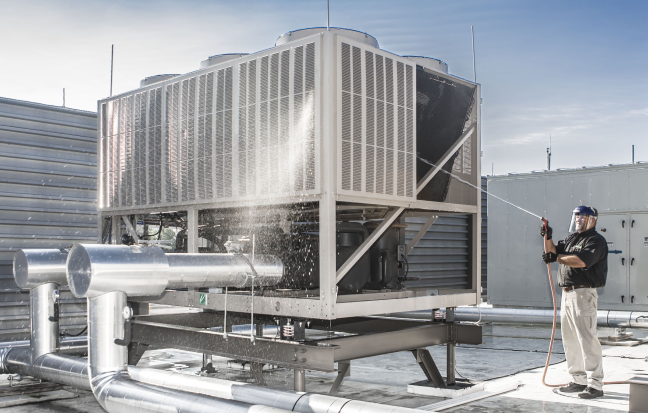
When you step into a room that feels perfectly cool in the summer or comfortably warm in the winter, it’s easy to forget the science working silently in the background. That comfort is delivered by a system known as HVAC.
For both homeowners and business operators, HVAC is not just about indoor temperature; it’s about air quality, efficiency, and long-term value. If you’ve ever wondered what HVAC truly is, how it operates, and why it matters for both residential and commercial spaces, this guide breaks it all down clearly and practically.
Understanding HVAC: The Basics
HVAC stands for Heating, Ventilation, and Air Conditioning. It’s the system that regulates the environment inside your home, office, or industrial building. An HVAC setup keeps you warm in the winter, cool in the summer, and ensures that the air you breathe is clean and fresh.
Think of it as the lungs of your space circulating, filtering, and conditioning the air to maintain both comfort and health. And when you need expert service in Dallas, Best Choice Plumber ensures your system is always working at peak performance.
How Does an HVAC System Work?
An HVAC system is a connected network of parts that work together to provide comfort and maintain healthy indoor air. At its core, every system is built around three main functions: heating, ventilation, and cooling.
Heating
Heating is managed through furnaces, boilers, or heat pumps. Furnaces use gas, oil, or electricity to warm air and distribute it through ducts. Boilers heat water or generate steam that flows through radiators or underfloor pipes. Heat pumps are highly efficient since they transfer heat rather than generate it, making them useful for both heating and cooling.
Ventilation
Ventilation plays a vital role in keeping the air fresh. It allows a steady exchange of indoor and outdoor air, removing dust, smoke, and allergens while also controlling humidity and restoring oxygen levels. Without proper ventilation, indoor air becomes stale and uncomfortable.
Air Conditioning
Cooling is achieved through the refrigeration cycle. Air conditioners absorb indoor heat through refrigerants and release it outdoors. During this process, humidity is reduced, creating a more comfortable indoor environment.
The Cycle of Operation
The process begins with air intake, where air is drawn in from outside or recirculated from indoors and cleaned by filters. It then moves to conditioning, where the air is heated, cooled, dehumidified, or further purified, depending on the thermostat setting. Next, the treated air is distributed throughout the space, either through ducts in central systems or directly from units in ductless systems. The cycle ends with exhaust, which removes stale or contaminated air while safely venting gases from combustion systems outdoors.
Types of HVAC Systems
Split Systems
Split systems use an indoor unit for air distribution and an outdoor unit for cooling or heating. They are the most common choice for homes and small businesses because of their reliability and ease of installation.
Ductless Mini-Splits
Ductless mini-splits work without ductwork and control temperatures zone by zone. They are efficient, quiet, and ideal for older homes, additions, or spaces where ducts are not practical.
Hybrid Systems
Hybrid systems combine a furnace with a heat pump and switch between them automatically. This helps lower energy costs while keeping indoor temperatures steady year-round.
Packaged Systems
Packaged systems place all HVAC components in one outdoor unit connected to the indoor space. They are compact and commonly used in smaller commercial buildings or homes with limited room indoors.
Geothermal Systems
Geothermal systems draw energy from the ground or water sources. They cost more upfront but are long-lasting, efficient, and save money on energy bills in the long run.
Zoned HVAC Systems
Zoned systems split a property into different areas, each with its own thermostat. This allows one part of a home or office to stay cooler while another remains warmer, improving comfort and efficiency.
HVAC for Homes vs. Businesses
Factor | Residential HVAC | Commercial HVAC |
Size & Scale | Smaller systems, usually split or ductless | Larger, centralized, or rooftop units |
Maintenance Needs | Seasonal checks | Frequent inspections and servicing |
Cost | Lower upfront, moderate bills | Higher investment, long-term ROI |
Customization | Basic zoning or smart thermostats | Advanced zoning, automation, air balancing |
Homeowners in Dallas often focus on comfort and utility bills, while businesses prioritize efficiency and consistent performance. Best Choice Plumber serves both with tailored solutions.
Installation of HVAC Systems
Installing a new HVAC system isn’t just about placing equipment; it requires careful planning.
- Assessment – Load calculation to measure heating and cooling needs.
- System Selection – Choosing the right type (split, ductless, packaged, etc.).
- Installation Process – Positioning units, connecting ducts or refrigerant lines, wiring thermostats.
- Testing – Ensuring efficiency and safety before operation.
Professional installation ensures the system performs at its best and reduces costly breakdowns later.
HVAC Installation and Replacement Costs
Costs vary depending on property size, type of system, and location.
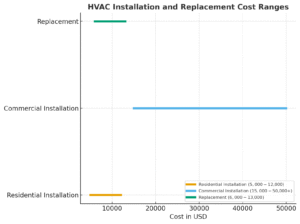
Tip: Always ask for a detailed estimate covering equipment, labor, and potential upgrades.
The Role of Maintenance
Just like your car needs oil changes, HVAC systems require consistent maintenance.
Maintenance Checklist
- Replace or clean filters regularly
- Inspect ducts for leaks
- Test thermostat accuracy
- Check refrigerant levels
- Clean coils and fans
- Inspect electrical connections
Skipping maintenance leads to higher bills, reduced efficiency, and a shorter lifespan for your system.
How Often Should HVAC Be Serviced
Residential systems – Twice a year (spring and fall).
Commercial systems – Quarterly or more frequently, depending on usage.
Benefits of an HVAC System
For Homeowners | For Businesses |
Modern HVAC systems provide year-round comfort, improve indoor air quality for healthier living, and deliver greater energy efficiency to reduce costs and environmental impact. | A reliable HVAC system creates a comfortable environment for staff and customers, safeguards equipment and inventory, and ensures long-term operational savings. |
The Efficiency Factor
Energy efficiency is one of the biggest concerns for both homeowners and business operators. Modern HVAC systems reduce energy consumption significantly when combined with proper insulation and smart thermostats.
Choosing the Right HVAC Company
When selecting a service provider, look for:
- Licensed and certified technicians
- Transparent pricing
- Strong local reputation
- Maintenance packages
- 24/7 emergency support
For businesses, add criteria like commercial expertise, compliance knowledge, and large-scale project management.
The Future of HVAC
The industry continues to advance with innovations like:
- Smart thermostats with remote access
- Variable refrigerant flow (VRF) systems
- Energy recovery ventilators (ERVs)
- Integration with renewable energy sources
These innovations not only improve efficiency but also redefine how comfort is managed in both homes and commercial buildings.
Final Thoughts
An HVAC system is more than just a piece of equipment. It’s the heartbeat of indoor comfort and air quality. From homes needing a simple split system to businesses investing in complex commercial units, the principles remain the same: effective heating, cooling, and ventilation.
For homeowners, understanding your HVAC helps you save on bills and enjoy a healthier living space. For businesses, it ensures productivity, compliance, and customer satisfaction. Regular maintenance, professional installation, and the right system choice are what keep everything running smoothly year after year.
The next time you adjust your thermostat and feel instant relief, remember the complex yet fascinating system working behind the scenes, quietly keeping life comfortable.
Frequently Asked Questions
It’s the system that heats, cools, and ventilates your home or business. In short, it keeps your indoor air comfortable and clean.
Most systems range from $5,000–$12,000 depending on size and type. BestChoice Plumber in Dallas offers fair, upfront pricing.
Multiply your AC’s age by the repair cost if it’s over $5,000, replace it. This helps avoid overspending on old units.
The compressor is usually the priciest component to repair or replace. Protect it with regular maintenance to extend its life.
Filters should be replaced every 1–3 months for best performance. In Dallas, dust and pollen make frequent changes essential.
On average, systems last 15–20 years with proper care. Routine service from BestChoice Plumber helps maximize lifespan.